
 Upload BOM

All Products
- Integrated Circuits (ICs)
-
Audio Special Purpose
Clock/Timing - Application Spec…
Clock/Timing - Clock Buffers, D…
Clock/Timing - Clock Generators…
Clock/Timing - Delay Lines
Clock/Timing - IC Batteries
Clock/Timing - Programmable Tim…
Clock/Timing - Real Time Clocks…
Data Acquisition - ADCs/DACs - …
Data Acquisition - Analog Front…
Data Acquisition - Analog to Di…
Data Acquisition - Digital Pote…
Data Acquisition - Digital to A…
Data Acquisition - Touch Screen…
Embedded - CPLDs (Complex Progr…
Embedded - DSP (Digital Signal …
Embedded - FPGAs (Field Program…
Embedded - FPGAs (Field Program…
Embedded - Microcontrollers
Embedded - Microcontrollers - A…
Embedded - Microprocessors
Embedded - PLDs (Programmable L…
Embedded - System On Chip (SoC)…
Interface - Analog Switches - S…
Interface - Analog Switches, Mu…
Interface - CODECs
Interface - Controllers
Interface - Direct Digital Synt…
Interface - Drivers, Receivers,…
Interface - Encoders, Decoders,…
- Discrete Semiconductor Pro…
-
Diodes - Bridge Rectifiers
Diodes - Rectifiers - Arrays
Diodes-Rectifiers-Single
Diodes - RF
Diodes - Variable Capacitance (…
Diodes - Zener - Arrays
Diodes - Zener - Single
Power Driver Modules
Thyristors - DIACs, SIDACs
Thyristors - SCRs
Thyristors - SCRs - Modules
Thyristors - TRIACs
Transistors - Bipolar (BJT) - A…
Transistors - Bipolar (BJT) - A…
Transistors - Bipolar (BJT) - R…
Transistors - Bipolar (BJT) - S…
Transistors - Bipolar (BJT) - S…
Transistors - FETs, MOSFETs - A…
Transistors - FETs, MOSFETs - R…
Transistors - FETs, MOSFETs - S…
Transistors - IGBTs - Arrays
Transistors - IGBTs - Modules
Transistors - IGBTs - Single
Transistors - JFETs
Transistors - Programmable Unij…
Transistors - Special Purpose
Diodes - Rectifiers - Single
- Isolators
- RF/IF and RFID
-
Attenuators
Balun
RF Accessories
RF Amplifiers
RF Demodulators
RF Detectors
RF Diplexers
RF Directional Coupler
RF Evaluation and Development K…
RF Front End (LNA + PA)
RF Misc ICs and Modules
RF Mixers
RF Modulators
RF Power Controller ICs
RF Power Dividers/Splitters
RF Receiver, Transmitter, and T…
RF Receivers
RF Shields
RF Switches
RF Transceiver ICs
RF Transceiver Modules
RF Transmitters
RFI and EMI - Contacts, Fingers…
RFI and EMI - Shielding and Abs…
RFID Accessories
RFID Antennas
RFID Evaluation and Development…
RFID Reader Modules
RFID Transponders, Tags
RFID, RF Access, Monitoring ICs…
- Sensors, Transducers
-
Accessories
Amplifiers
Capacitive Touch Sensors, Proxi…
Color Sensors
Current Transducers
Dust Sensors
Encoders
Float, Level Sensors
Flow Sensors
Force Sensors
Gas Sensors
Humidity, Moisture Sensors
Image Sensors, Camera
IrDA Transceiver Modules
Magnetic Sensors - Compass, Mag…
Magnetic Sensors - Linear, Comp…
Magnetic Sensors - Position, Pr…
Magnetic Sensors - Switches (So…
Magnets - Multi Purpose
Magnets - Sensor Matched
Motion Sensors - Accelerometers…
Motion Sensors - Gyroscopes
Motion Sensors - IMUs (Inertial…
Motion Sensors - Inclinometers
Motion Sensors - Optical
Motion Sensors - Tilt Switches
Motion Sensors - Vibration
Multifunction
Optical Sensors - Ambient Light…
Optical Sensors - Distance Meas…
More product categories >>
NE555P Timer Pinout and Functions Quickly How to Use
2/24/2026 1:43:26 AM
1. NE555P Timer Overview
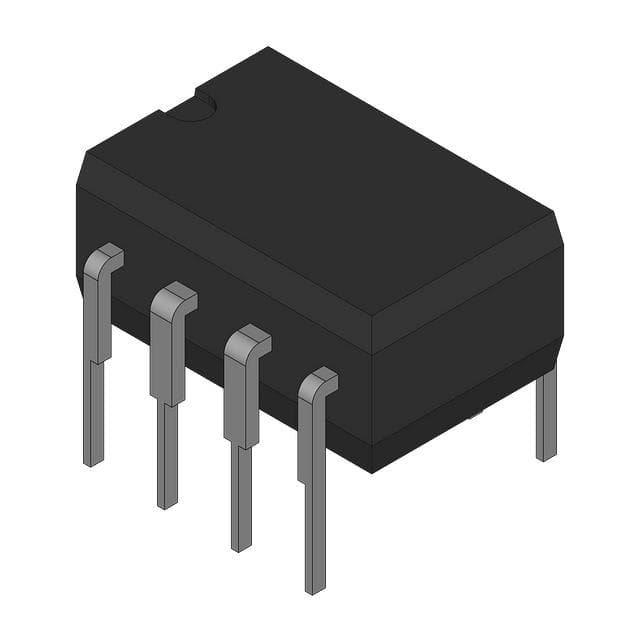
The NE555P supports both monostable (one-shot) and astable (oscillator) operating modes. By using only a small number of external resistors and capacitors, designers can easily generate precise delays, square waves, pulse-width modulation (PWM), and clock signals. Its simplicity, robustness, and low cost have made it a standard choice in education, prototyping, industrial control, and consumer electronics.
2. NE555P Features
The NE555P offers a combination of flexibility and reliability that has kept it relevant for decades:- Timing intervals ranging from microseconds to hours
- Supports astable and monostable operation modes
- Adjustable duty cycle using external resistors
- TTL-compatible output levels
- Output stage capable of sourcing or sinking up to 200 mA
- Wide operating supply voltage range (typically 5 V to 15 V)
- Stable operation across temperature and voltage variations
- Available in 8-pin PDIP package, ideal for breadboards and through-hole designs
3. NE555P Pinout and pin Functions

| NAME | Pin NO. | TYPE | DESCRIPTION |
| CONT | 5 | Input/output | Controls comparator thresholds, Outputs 2/3 x VCC, allows bypass capacitor connection |
| DISCH | 7 | Output | Open collector output to discharge timing capacitor |
| GND | 1 | - | Ground |
| NC | - | - | No internal connection |
| OUT | 3 | Output | High current timer output signal |
| RESET | 4 | Input | Active low reset input forces output and discharge low. |
| THRES | 6 | Input | End of timing input. THRES > CONT sets output low and discharge low |
| TRIG | 2 | Input | Start of timing input. TRIG < 1/2 CONT sets output high and discharge open |
| V_CC | 8 | - | Input supply voltage, 4.5V to 16V. SE555 maximum is 18V. |
4. NE555P Specifications
| Item | Value |
| Brand: | Texas Instruments |
| Category: | Clock & Timer ICs |
| RoHS: | Yes |
| Type: | Standard |
| Number of Internal Timers: | 1 Timer |
| Output Type: | TTL |
| Package/Case: | PDIP-8 |
| Supply Voltage - Min: | 4.5 V |
| Supply Voltage - Max: | 16 V |
| Minimum Operating Temperature: | 0 C |
| Maximum Operating Temperature: | + 70 C |
| Series: | NE555 |
| Country of Assembly: | MX |
| Country of Diffusion: | US |
| Country of Origin: | MX |
| High Level Output Current: | 200 mA |
| Low Level Output Current: | - 200 mA |
| Operating Supply Current: | 2 mA |
5. NE555P Simplified Schematic

6. NE555P Functional Block Diagram

7. NE555P Alternative Parts (Equivalents & Replacements)
Several compatible or functionally similar timer ICs can be used as alternatives to the NE555P, depending on power, precision, and application needs:LM555
A direct equivalent with nearly identical electrical characteristics. Commonly used as a drop-in replacement in most 555 timer circuits.
NA555 / SA555 / SE555
Variants of the 555 family designed for different temperature ranges and reliability requirements. These versions are often used in industrial or automotive environments.
CMOS 555 (e.g., LMC555, TLC555)
Low-power CMOS-based versions of the 555 timer. They offer much lower supply current and improved timing accuracy, making them suitable for battery-powered designs.
556 Timer
A dual 555 timer IC in a single package. Useful when two independent timers are required in the same system.
8. NE555P How to Use
Electronic Basics #26: 555 Timer IC
How a 555 Timer IC Works
NE555 tutorial: three useful circuits
9. NE555P Application
The NE555P is used in a wide variety of electronic applications due to its versatility and ease of use:- Pulse generation and square-wave oscillators
- LED flashers and blinkers
- PWM signal generation for motor speed or brightness control
- Sequential timing circuits
- Missed-pulse detectors
- Pulse shaping and conditioning
- Frequency dividers
- Simple industrial control circuits

- Over 50,000 parts in stock

- One-stop shop

- Original parts at the competitive price

Copyright © 2025 Xinhou Future Technology Co., Limited




Subscription Results
If you do not receive it within 5 minutes, please check your spam folder or contact us via the website.